-
About us

- Ukrainian Youth Association in Estonia
- Ukrainian art studio “MRIJA”
- Ukrainian folk music ensemble “Dibrova”
- Ukrainian community “Vodohray”
- Children’s reading club “KOLO”
- Ukrainian community "Spohad"
- Cultural club "Kryla" of the "ORFEY" society
- Shared library Spilno_ee
- Ukrainian Society and "Kalyna" Saturday School in Valga
- Prosvita - Ukrainian cultural and educational society
- UKRAINIAN MEDIA DRUZI NGO
- Ukraina Käsitöö Meistrid MTÜ
- Ukrainian society “Vitchyzna”
- Choreographic ensemble “Kolor”
- Ukrainian studio “Kobzaryk”
- Art studio “Anima”
- Stand Up from UA
- Kotygoroško
-
Our team
-
Projects and events
-
Supporting Ukraine
-
Education
-
Culture
-
Festivals
-
All news
-
Contacts
-
Photo




Oksana Mamutova: willpower, culture and 27 years of Prosvita in Estonia
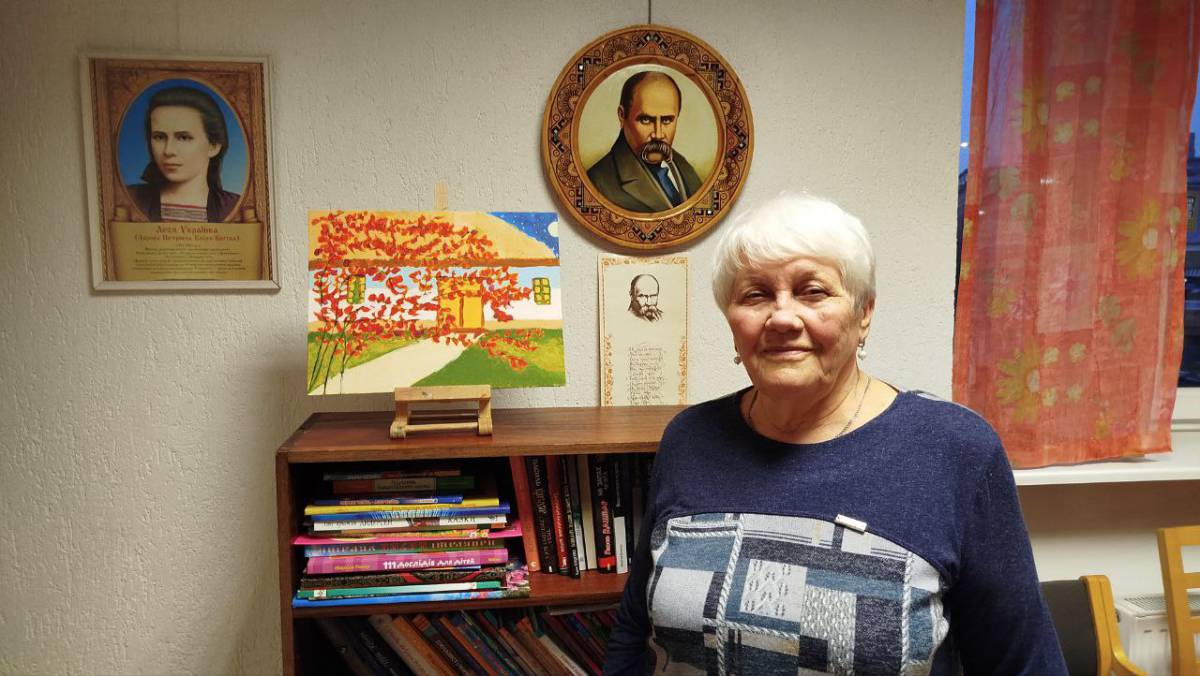
We often think it is too late for change in life. It seems that age, circumstances or setbacks stop us on the way to something new. But is that really so? The story of Oksana Mamutova, who decided to get a university degree at 37, joined the Ukrainian society Prosvita in Estonia at 57 and then led it for 27 years, proves the opposite: it is never too late. And yes, education and constant growth, the support of like-minded people and creativity are the key to change, both in personal life and in the life of a community.
Prosvita abroad: lost centres that kept the Ukrainian soul?
Prosvita is a symbol of Ukrainian culture, education and spiritual revival. In Ukraine the society was founded as early as 1868 and became a driving force in spreading the Ukrainian language, literature and national consciousness. Over the years Prosvita went beyond Ukraine, uniting Ukrainians in different parts of the world and creating space to preserve native traditions and build strong diasporas.
Prosvita was one of the key organisations of the Ukrainian diaspora in the USA. In Canada Prosvita played a significant role in preserving Ukrainian identity among Ukrainians who emigrated at the beginning of the 20th century. The Ukrainian cultural society Prosvita in Argentina celebrated its 100th anniversary this year and has up to 10 branches in different cities.
Today, however, there are not many organisations called Prosvita abroad – Prosvita’s work outside Ukraine developed in different forms and was often absorbed into larger diaspora organisations that took over its functions (for example, the Federation of Ukrainian Organisations in Australia, the Association of Ukrainians in Poland, the Ukrainian Canadian Congress and others). In some countries Prosvita may have existed in the past, but its work stopped for lack of funding or interest. For example, Prosvita in Uruguay, founded in 1934, faced criticism from communist-minded emigrants and gradually ceased its activity; its trace was lost after the mid-20th century.
In Estonia, Prosvita was founded in 1997 and has since become not just a cultural centre but a real home for the Ukrainian community. The Ukrainian Sunday school “Nadiia”, the choir “Ukraina”, the ensemble “Susidky”, participation in the international festivals “Flowers of Ukraine” and “Northern Star” – thanks to Prosvita’s work, Ukrainian identity was preserved and events were held that brought people together.
To find out “how it was”, we invited Oksana Mamutova, who shared her memories of founding and running the organisation. Her story is an inspiration for anyone who wants to feel part of the great Ukrainian family abroad. This article tells of Mrs Oksana’s path, Prosvita and the important role they played for Ukrainians in Estonia.
How did it all begin?
Every country has special people who build bridges between past and future, unite communities and leave a bright mark on community life. Mrs Oksana is one of them. She stood at the origins of Ukrainian cultural life in Estonia, leading Prosvita – an organisation that became a centre of unity, creativity and support for Ukrainians.
Oksana Mamutova, now 84, moved to Estonia back in 1962. After graduating from the Odesa Trade College and working in Dnipropetrovsk, Oksana moved to Estonia with her husband. She first worked as a turner at the “Punane RET” factory, later moved to the “Albatross” shop and then began teaching merchandising at a vocational school.
“At 37 I tried to enter the Leningrad Trade University but didn’t get in. But when I saw an announcement about admissions to the trade economics faculty at the University of Tartu, I decided it was just for me. So 20 years after finishing school I passed the entrance exams. It’s not only possible – it’s something you must do! You have to keep learning all the time,” says Mrs Oksana.
In 1996, by chance, she came to a rehearsal of the Ukrainian community society in Tallinn – at the time the first and only Ukrainian organisation in Estonia, with branches in different towns and over 300 active members:
“Yevhen Hetmantsev invited me to listen to a concert rehearsal. Then I came to the concert, then to a gathering – and I stayed. Later I was even elected to the board.”
However, internal disagreements in the society led her and like-minded people to set up a new organisation – Prosvita:
“It was Olia Horianska’s idea: she registered the organisation Prosvita in 1997 and invited my husband and me to join. We set out the principles: preserving Ukrainian culture and openness to everyone interested in the Ukrainian language and traditions, regardless of origin. If someone likes Ukrainian culture and wants to support it, sing or learn the language, we are always glad. By the way, Prosvita’s board included Valia Pralla, an Estonian who learned to speak and write Ukrainian. We couldn’t have taken her on if we had accepted only people born Ukrainian, for example.”
27 years of cultural mission
Oksana Mamutova was elected head of Prosvita in 1998. One of the first important projects was the Ukrainian Sunday school “Nadiia”, where children learned Ukrainian, sang carols and prepared performances. The school continues to grow and operate to this day.
“I still think the most important thing in these 27 years was founding the school. The idea came from Volodymyr Leibiuk – he was the second head of the Ukrainian community society and later began leading the ensemble Zhurba. He brought me primers, about fifteen of them, a reader and books. We invited Svitlana Berezina, a Ukrainian language teacher, gathered children and in September 1998 began lessons with the first 15 pupils.
The problem with a Sunday school is that parents have to bring the child, and on weekend mornings everyone wants to rest. So I picked up the children who lived near me, drove them to school, we had lessons there and went back home.”
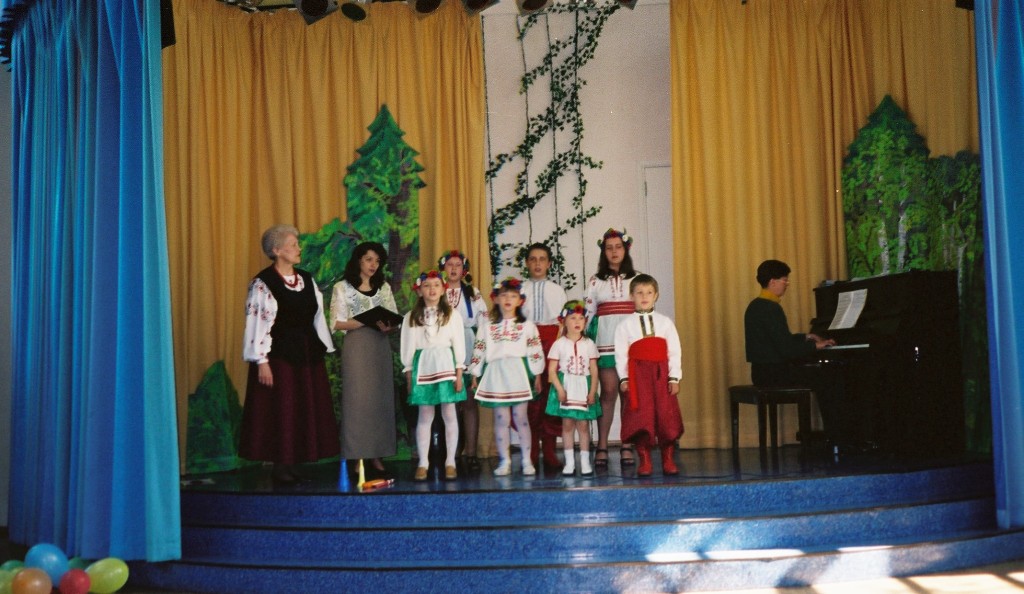
Annual concert of the Sunday school “Nadiia” at Pelgulinna rahvamaja, 2003
Until 2005, neither Prosvita nor the school had permanent premises – they worked in the rooms of the national minorities’ union “Lyra”, in an ordinary school, in the restaurant “Renaissance” and at the Tallinn Naval Officers’ House, until they were given the use of two rooms in a former dormitory:
“We got an old building in poor condition, but through our own and joint efforts and with sponsors’ support we renovated it, replaced the old windows, doors, floors and walls and furnished the space. Each of us did something to improve it. It was the first home for Prosvita and the school, and for other organisations too, which we created together as one big family.”
Prosvita members also founded the choir “Ukraina”, an important representative symbol of Prosvita, the ensemble “Susidky”, held cultural events and festivals, and took part in “Flowers of Ukraine” and “Northern Star”, which are still held every year. In the 2000s came the idea of creating an umbrella organisation to unite Ukrainian societies – the Association of Ukrainian Organisations in Estonia, which at that time united about 10 organisations.

Memories of the work of the Association of Ukrainian Organisations in Estonia
Education and constant growth are the key to change in life
Today, with a new wave of Ukrainian migration to Estonia because of the war in Ukraine, Estonia’s Prosvita has the potential to become a place where history and the present meet, uniting Ukrainians for shared creativity and the preservation of their culture.
Oksana Mamutova, whose life is an example of how willpower, love of culture and responsibility to society can change many people’s lives, stresses the importance of culture and mutual understanding:
“Community work gives strength and energy and builds responsibility. We work with culture and preserve the language and traditions. It is important to create an environment where everyone can find support and inspiration; we need to involve young people and keep learning. Only then can we leave a lasting mark for future generations. Politics only divides; culture unites.”
You can start over, fulfil a dream or join an important cause at any moment. You just need to believe in yourself, take the first step and not be afraid of change. After all, life gives us countless chances – the main thing is not to be afraid to take them and to keep learning!