-
About us

- Ukrainian Youth Association in Estonia
- Ukrainian art studio "MRIJA"
- Ensemble of folk instruments "Dibrova"
- Ukrainian community "Vodohray"
- Reading Club "Kolo"
- Ukrainian community "Spohad"
- Cultural club "Kryla" of the "ORFEY" society
- Shared library Spilno_ee
- Ukrainian Society and "Kalyna" Saturday School in Valga
- Prosvita - Ukrainian cultural and educational society
- UKRAINIAN MEDIA DRUZI NGO
-
Our team
-
Projects and events
-
Supporting Ukraine
-
Education
-
Culture
-
Festivals
-
All news
-
Contacts
-
Photo




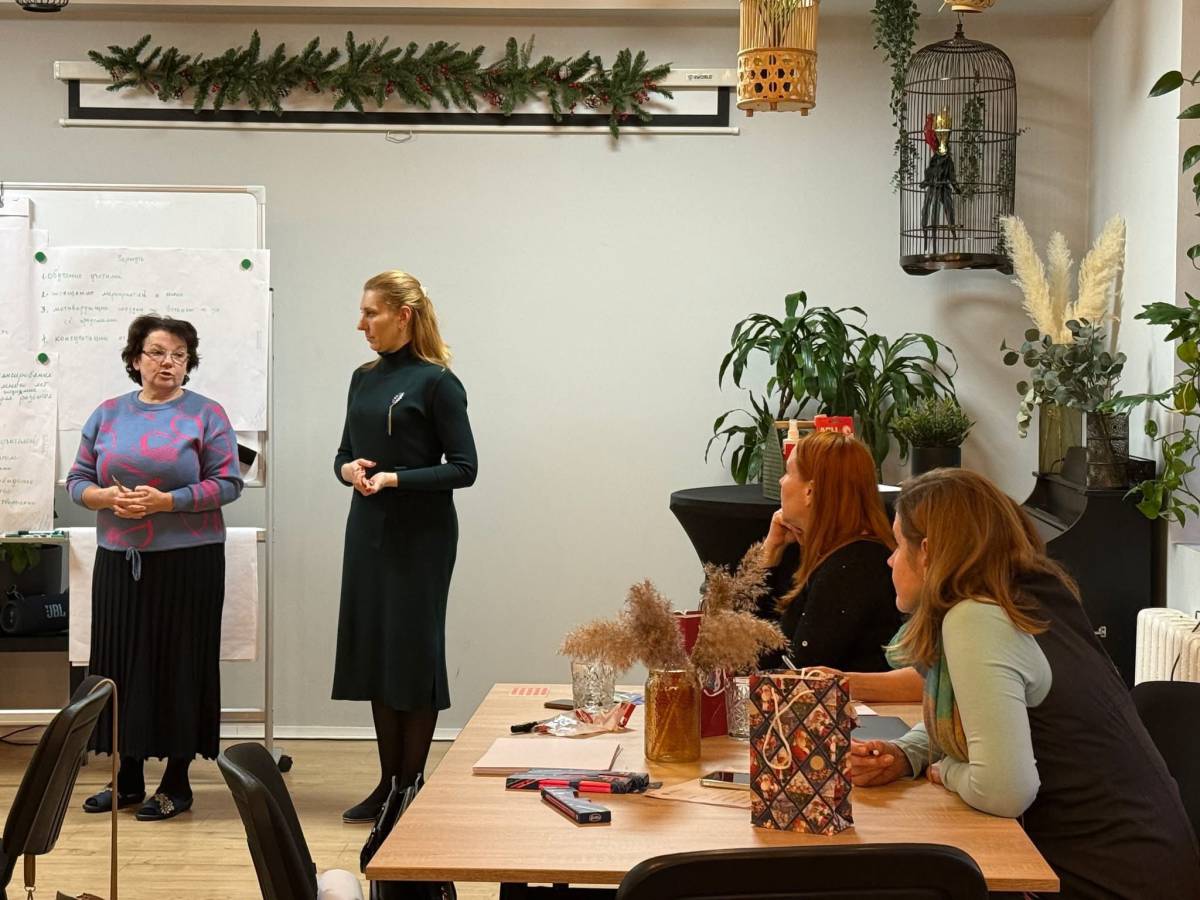
On 11 January 2026, an important meeting initiated by the Integration Foundation and the Estonian Ministry of Education and Research was held to discuss the development of Sunday and hobby schools operated by Estonia’s national communities.
In this context, “Sunday schools” refers to community-based weekend schools that teach children their heritage language and culture, rather than religious schools.
The Association of Ukrainian Organizations in Estonia, which includes four Ukrainian weekend schools, took an active part in the meeting and presented the Ukrainian community’s educational experience.
Position of the Ministry of Education and Research
During the meeting, the Estonian Ministry of Education and Research emphasised the following principles:
children’s right to learn their mother tongue and culture is guaranteed by law;
preserving one’s language and identity is an inherent right of every child;
the state supports weekend schools through the Integration Foundation;
these schools provide an important model for developing bilingualism and a multicultural society.
One of the key messages expressed during the meeting was:
Two languages and two cultures do not conflict with each other; together, they shape a strong individual with a rich identity.
Presentations by Ukrainian weekend schools
Nadija Kool Ukrainian Sunday School in Tallinn, represented by Board Chair Volodymyr Palamar, Deputy Head Alla Inno-Yakymenko and Ukrainian-language teacher Tetiana Klymenko.
The school presented its subjects, modern teaching methods and partnership projects designed to strengthen the Ukrainian studies component of its programme.
The Ukrainian weekend school of the Ukrainian Youth Union in Estonia in Tallinn, represented by Deputy Head Anastasiia Kozachok and Ukrainian-language teacher Hanna Kiriienko.
The representatives presented the school’s areas of study and educational programme, as well as its active cooperation with other Ukrainian educational centres.
Sillamäe Ukrainian Association Vodograi, represented by the school’s director, Larysa Zhytnik.
Particular attention was given to current challenges, including children’s psychological well-being, the consequences of the war and the creation of a safe educational environment.
We are educating a new generation of young Ukrainian leaders. We are one family. We are proud of our children.
The Kalyna Ukrainian Association and Saturday School in Valga, represented by the school’s director, Ruslana Dovha.
The presentation highlighted the challenges of assimilation, the importance of psychological support and the need to combine language, culture and creativity.
When children ask whether the school will continue, that is our greatest motivation.
Experience of other national communities
Schools representing the Azerbaijani, Armenian, Latvian, Korean and other national communities presented their experience and activities.
The meeting highlighted that:
Estonia’s cultural landscape is exceptionally diverse;
weekend schools are an important foundation for preserving national identity;
communities face similar challenges, making the exchange of experience invaluable.
Important information from the Ministry of Education and Research
Participants were informed during the meeting that:
schools must be registered in the Estonian Education Information System, known as EHIS;
funding would become more stable instead of being provided only through one-off grants;
a new state support model would be introduced in 2026;
the funding application round would be announced on 12 January 2026.
This represented an important and positive step for Ukrainian schools operating in Estonia.
We sincerely thank Kätlin Kõverik and Järvi Lipasti for their support and considerate attention to the needs of Ukrainian children.
We also thank Kristiina Pirgof-Benton, Head of Cultural Diversity at the Integration Foundation, for the professional organisation of the meeting, her openness and her continued support for Ukrainian educational centres.
Special thanks go to psychologist Natalja Šastina for delivering an exceptionally valuable training session for teachers on preventing burnout and maintaining their inner resilience.
We also thank the Embassy of Ukraine in the Republic of Estonia and Ukraine’s Ambassador to Estonia, Volodymyr Bojechko, for their comprehensive support of Ukrainian schools in Estonia.
Ukrainian education in Estonia is strong because we stand together.
Our children have endured enormous hardships: the loss of their homes and loved ones, separation and anxiety. Russia has taken away their childhood…
It is our duty to create a safe, loving and supportive environment where children can hear their mother tongue, experience Ukrainian culture and develop confidence in who they are.
A place where children can not only learn but also grow into strong and dignified people who are proud of their Ukrainian identity.