-
About us

- Ukrainian Youth Association in Estonia
- Ukrainian art studio “MRIJA”
- Ukrainian folk music ensemble “Dibrova”
- Ukrainian community “Vodohray”
- Children’s reading club “KOLO”
- Ukrainian community "Spohad"
- Cultural club "Kryla" of the "ORFEY" society
- Shared library Spilno_ee
- Ukrainian Society and "Kalyna" Saturday School in Valga
- Prosvita - Ukrainian cultural and educational society
- UKRAINIAN MEDIA DRUZI NGO
- Ukraina Käsitöö Meistrid MTÜ
- Ukrainian society “Vitchyzna”
- Choreographic ensemble “Kolor”
- Ukrainian studio “Kobzaryk”
- Art studio “Anima”
- Stand Up from UA
- Kotygoroško
-
Our team
-
Projects and events
-
Supporting Ukraine
-
Education
-
Culture
-
Festivals
-
All news
-
Contacts
-
Logo
-
Photo


Estonian-Ukrainian cultural exchange day in Mulgimaa: two days of dialogue, song and new friendships
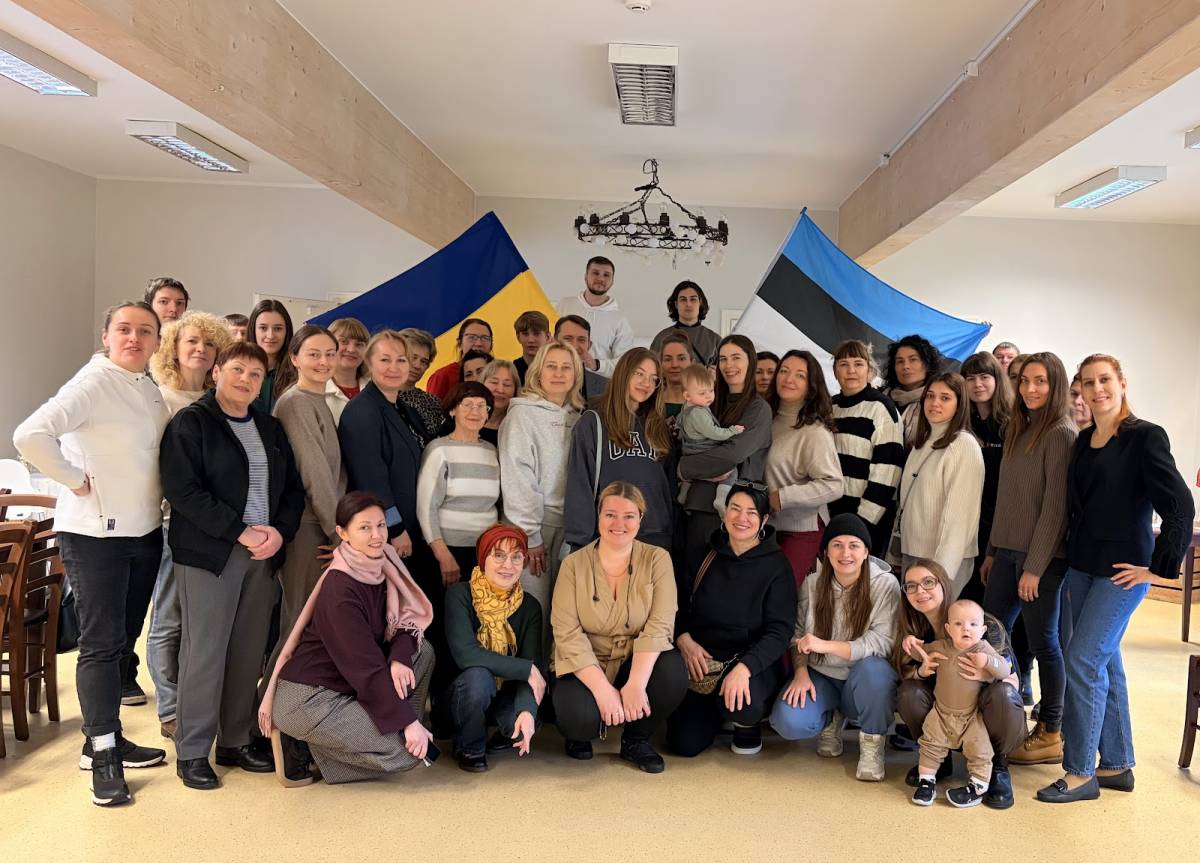
On 21–22 November 2026, the Association of Ukrainian Organisations in Estonia held an Estonian-Ukrainian cultural exchange day in South Estonia – a two-day trip to Mulgimaa with an overnight stay. The project “Eesti – Ukraina kultuurivahetuse koostööpäeva läbiviimine Lõuna-Eestis” was carried out on behalf of the Integration Foundation (Integratsiooni Sihtasutus) and funded by the Swiss-Estonian Cooperation Programme. The host was the Mulgi Elamuskeskus heritage centre.
The aim of the project was a two-way cultural exchange: through hands-on workshops and joint activities, to introduce Ukrainians to the culture and customs of Mulgimaa and the local community to Ukrainian culture. The programme ran in Ukrainian and Estonian with interpretation in both directions; during the tours participants also used a simultaneous interpretation app.
The project in numbers
- 2 days of programme – 21 and 22 November, with an overnight stay at Kivimäe tourist farm;
- 56 participants: 40 members of the Ukrainian community in Estonia and 16 members of the local Estonian community;
- 50 participants each day (40 Ukrainians and 10 Estonians), with attendance confirmed by signatures on the registration sheets;
- two working languages – Ukrainian and Estonian, with interpretation in both directions;
- all 12 participants who completed the feedback form gave the trip the highest rating.
Day one: Mulgi Elamuskeskus and an evening at Kivimäe
After arrival and a shared lunch, participants were divided into three mixed Ukrainian-Estonian groups. Working in small groups created a warm atmosphere and helped everyone get to know each other quickly.
The Mulgi Elamuskeskus guide told the story of how Mulgimaa developed and of the region's traditional farming, and participants walked around the farm in the first snow and met the local animals. In a cooking workshop everyone made traditional Mulgi sweets – kama truffles – and tasted blood sausage with bread. Folk dance teacher and musician Katti Koppel led a workshop of Estonian social folk dances.
In the evening at Kivimäe Turismitalu, participants deliberately sat at mixed tables. The hosts had prepared get-to-know-you games in Estonian, and the Ukrainian side used a map of Ukraine to present the regions participants come from, the impact of the war and their routes of evacuation. The evening ended with a Ukrainian song performed by Kateryna Chalova, singer and vocal teacher of the “Volya” ensemble, which the whole hall joined in.
Day two: a dialogue of cultures, Holdre Manor and Viljandi
In the morning participants again worked in mixed teams, using interactive tasks to compare the traditional foods, folk dress and dance traditions of both nations. The group then visited Holdre Manor and the Estonian National Piano Museum with its unique collection of historical keyboard instruments.
Despite the rain, coordinator Jaanika Toome led an informative walking tour of central Viljandi. The trip ended with joint singing on an open-air stage: participants performed an Estonian song and the famous Ukrainian “Chervona Ruta” – as one Estonian-Ukrainian choir.
What both sides presented and discussed
- Historical memory. During the museum tour the group discussed tragic pages of Estonian history, including the Soviet deportations. Ukrainian participants shared Ukraine's experience; both sides noted the similarity of what their nations had lived through and the importance of preserving their own language and roots.
- Language and regions. Estonians presented the Mulgi dialect and regional culture; Ukrainians talked about the dialects of western, eastern and southern Ukraine.
- Food and everyday life. The Estonian side introduced traditional foods – pickled cucumbers, sprat sandwiches, blood sausage and kama dishes. Ukrainians described the cuisine of different regions: coastal cooking, the Carpathian tradition of gathering mushrooms and berries, and the gardening and home preserving of the black-soil regions.
- Folk dress. Comparing Mulgi folk costume with the Ukrainian vyshyvanka and traditional dress, participants noticed an interesting difference: stripes and patterns on Estonian skirts are mostly vertical, while on Ukrainian skirts (plakhta) the ornament is mainly horizontal.
- Dance. Participants compared how folk dance has developed: Ukrainian stage dance was shaped by the classical dance school, while Estonian dance has kept its folk and social roots and remains accessible to people of all ages.
Results
- Language practice. Estonian participants deliberately spoke Estonian, listened patiently and helped find the right words. For many Ukrainians who have already learned the language but fear making mistakes, this gave a real boost of confidence.
- Personal contacts. Participants exchanged contacts to keep in touch and agreed to share photos and videos.
- Future cooperation. Katti Koppel and the artistic director of the Ukrainian song and dance ensemble “Volya” agreed on joint creative initiatives, workshops and exchanges between the groups. The Association invited its Estonian partners to the “Vyshyvanka Unites” ethno-festival, and they invited our community to their events.
“Two very full days immersed in Mulgi culture flew by in a single breath. It was an interesting experience to talk to native speakers and learn about their history, which has a lot in common with Ukraine's.”
“Trips like this are necessary to immerse yourself more deeply in Estonia's culture, history and values and to talk to native speakers.”
Project team
- Volodymyr Palamar – project manager, Chair of the Board of the Association of Ukrainian Organisations in Estonia;
- Anastasiia Kozachok – first assistant to the project manager, group leader, Deputy Chair of the Ukrainian Youth Association in Estonia;
- Tetiana Klymenko – project team member and interpreter, deputy head of the Ukrainian Sunday school "Nadija";
- Olena Kozmenko – project team member, teacher at the Ukrainian Sunday school "Nadija".
Thank you!
We sincerely thank the Integration Foundation for its support and trust, and the Swiss-Estonian Cooperation Programme, which made the project possible.
Special thanks to our hosts – Mulgi Elamuskeskus and its head Are Tints, coordinator Jaanika Toome for the carefully prepared programme and the Viljandi tour, folk dance teacher Katti Koppel, the hosts of Kivimäe Turismitalu, Holdre Manor and the piano museum, the Estonian participants from the local community and our driver.
We thank the project team, singer Kateryna Chalova, everyone who organised the work on site, and every participant for their openness, sincerity and good spirits.
Photos: day one album · day two album. More about day one in a separate article.

Kaasrahastanud Šveitsi riik majanduslike ja sotsiaalsete erinevuste vähendamiseks Euroopa Liidus.
Eesti – Ukraina kultuurivahetuse koostööpäeva läbiviimine Lõuna-Eestis · Töövõtulepingu nr 6.4-4/2026/141-1