-
About us

- Ukrainian Youth Association in Estonia
- Ukrainian art studio “MRIJA”
- Ukrainian folk music ensemble “Dibrova”
- Ukrainian community “Vodohray”
- Children’s reading club “KOLO”
- Ukrainian community "Spohad"
- Cultural club "Kryla" of the "ORFEY" society
- Shared library Spilno_ee
- Ukrainian Society and "Kalyna" Saturday School in Valga
- Prosvita - Ukrainian cultural and educational society
- UKRAINIAN MEDIA DRUZI NGO
- Ukraina Käsitöö Meistrid MTÜ
- Ukrainian society “Vitchyzna”
- Choreographic ensemble “Kolor”
- Ukrainian studio “Kobzaryk”
- Art studio “Anima”
- Stand Up from UA
- Kotygoroško
-
Our team
-
Projects and events
-
Supporting Ukraine
-
Education
-
Culture
-
Festivals
-
All news
-
Contacts
-
Logo
-
Photo


Ukraine and Estonia: the Association takes part in the “Cognitive Warfare of the 21st Century” conference at the Riigikogu
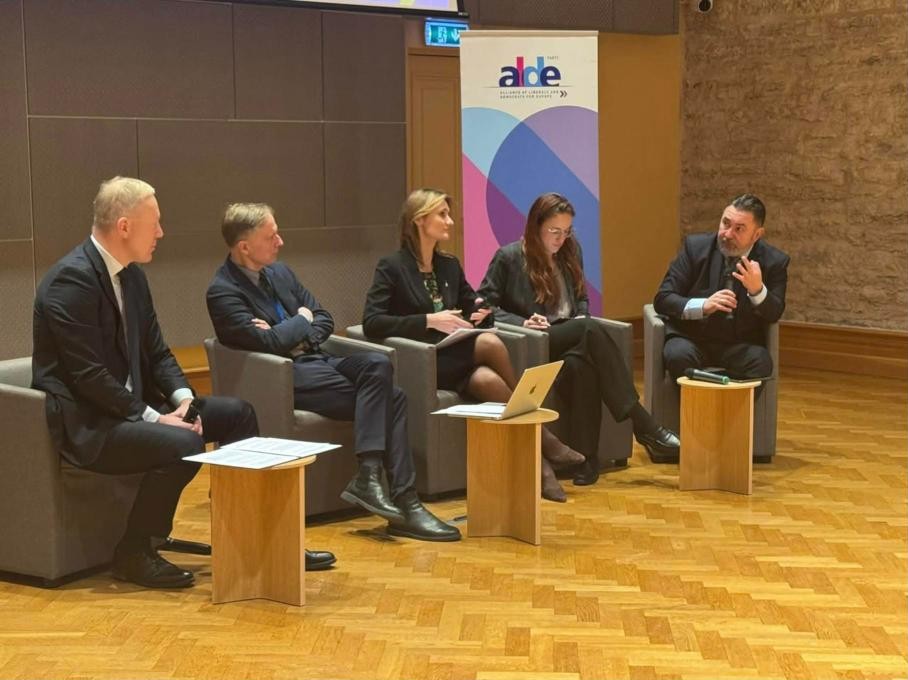
On 16 November, the Riigikogu — the Estonian parliament — hosted the Estonian-Ukrainian parliamentary conference “Cognitive Warfare of the 21st Century”. Teams from the Association of Ukrainian Organisations in Estonia and the Ukrainian Film Club in Estonia attended, including the Association’s Chairman of the Board Volodymyr Palamar, who is also an adviser to the Representation of the Ukrainian Parliament Commissioner for Human Rights in Estonia, together with the adviser’s team.
For the Association, the conference topics are directly linked to its daily work: preserving Ukrainian identity, spreading truthful information about Ukraine and developing cultural dialogue with Estonian society.
The conference was co-organised by the Estonian Reform Party (Reformierakond) faction, Ukraine’s Servant of the People party, the Alliance of Liberals and Democrats for Europe (ALDE) and the Friedrich Naumann Foundation for Freedom, in partnership with PÖFF. Among the organisers were Riigikogu member Yoko Alender and Ukrainian MP Yevheniia Kravchuk, both ALDE vice-presidents. The conference was part of the preparations for the Ukraine Recovery Conference (URC 2027), to be held in Tallinn on 28–29 January 2027.
Hybrid threats to parliamentary democracy. The first panel looked at how disinformation, election interference and cyberattacks undermine trust in democratic institutions and how parliaments can respond. Speakers included Mykyta Poturaiev, acting President of the OSCE Parliamentary Assembly and Chair of the Verkhovna Rada Committee on Humanitarian and Information Policy, Riigikogu member Eerik-Niiles Kross and Deputy Speaker of the Lithuanian Seimas Viktorija Čmilytė-Nielsen. The panel was moderated by Marko Mihkelson, Chair of the Riigikogu Foreign Affairs Committee.
Disinformation targeting women. The second panel focused on information attacks against women in politics and public life, and on women who build initiatives to counter russian propaganda. Experts from Ukraine, Estonia and Finland shared their experience, including specialists from the Centre for Countering Disinformation, MOLFAR and the NATO Cooperative Cyber Defence Centre of Excellence. The panel was moderated by Yevheniia Kravchuk.
Culture as a response. The third panel addressed culture as part of security: destroying heritage, appropriating history and trying to erase Ukrainian identity are part of russia’s war. Speakers included Estonian Minister of Culture Heidy Purga, Head of the Ukrainian House in Denmark Nataliya Popovych, Yevheniia Kravchuk and Ivanna Khitsinska, producer of “To Die to Live”. The panel was moderated by Edith Sepp, Director of the Estonian Film Institute.
After the conference, the documentary “To Die to Live” by Yuliia Hontaruk was screened at Kino Artis as part of the 30th PÖFF. After the screening the audience spoke with the director and the film’s protagonists — Ukrainian volunteers who took up the defence of Ukraine back in 2014. The day ended with informal networking and a performance by Ukrainian pianist Havryil Sydoryk, winner of the Klassikatähed 2025 competition.
The Association thanks its team — Nataliia Shevchenko and Maksym Shcherbatiuk (the adviser’s team), Association volunteer Andrii Yatsenko, MRIJA studio board member Alex Smirnov and the Association’s PR Director and co-founder of the Ukrainian Film Club Inna Hordiienko — and the organisers for the invitation to a conversation that matters for Ukraine, Estonia and our shared European future.
Source: Association post on Facebook. Photo: Association of Ukrainian Organisations in Estonia.